Question
LSM6DSO32 step count data
Hi,
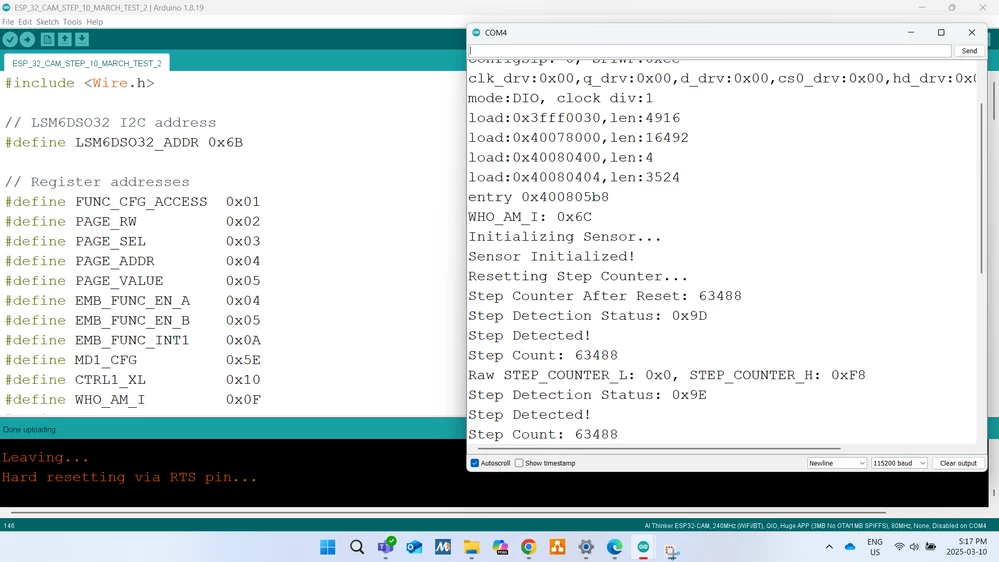
I designed a special board that includes the LSM6DSO32 sensor. I want to get step count data, for testing I am using ESP32-CAM with LSM6DSO32 via I2C. I have followed the basic routine mentioned in application notes. I can get only garbage value. I will attached sample code for reference. Can you check and help me step by step what to do? First code give step count 0 always. For second code I attached screenshot. Please look into it and tell if anything need to change.
#include <Wire.h>

// LSM6DSO32 I2C address
#define LSM6DSO32_ADDR 0x6B

// Register addresses
#define FUNC_CFG_ACCESS 0x01
#define PAGE_RW 0x17 //0x02
#define PAGE_SEL 0x02 //0x03
#define PAGE_ADDR 0x08 //0x04
#define PAGE_VALUE 0x09 //0x05
#define EMB_FUNC_EN_A 0x04
#define EMB_FUNC_EN_B 0x05
#define EMB_FUNC_INT1 0x0A
#define MD1_CFG 0x5E
#define CTRL1_XL 0x10
#define WHO_AM_I 0x0F
#define STEP_COUNTER_L 0x62
#define STEP_COUNTER_H 0x63
#define EMB_FUNC_SRC 0x64
#define PEDO_CMD_REG 0x83

void setup() {
 Serial.begin(115200);
 delay(1000);

 Wire.begin(13, 14); // SDA = GPIO13, SCL = GPIO14

 // Test communication with WHO_AM_I register
 byte whoAmI = readRegister(WHO_AM_I);
 Serial.print("WHO_AM_I: 0x");
 Serial.println(whoAmI, HEX);
 /*if (whoAmI != 0x6C) {
 Serial.println("Sensor not found!");
 while (1); // Stop execution if sensor is not found
 }*/
 if (whoAmI != 0x6C) {
 Serial.println("Sensor is found!");
 while (1); // Stop execution if sensor is not found
 }

 // Initialize the sensor
 initSensor();
 // Reset the step counter using 0x04
 resetStepCounter();
}

void loop() {
 // Check step detection status (read raw status register)
 byte stepStatus = readRegister(EMB_FUNC_SRC);
 Serial.print("Step Detection Status: 0x");
 Serial.println(stepStatus, HEX);
 if (stepStatus & (1 << 7)) { // Step detected bit is set
 Serial.println("Step Detected!");
 }

 // Read the step count (raw step counter values)
 uint16_t stepCount = readStepCounter();
 Serial.print("Step Count: ");
 Serial.println(stepCount);

 // Read and print the raw step counter registers
 byte stepLow = readRegister(STEP_COUNTER_L);
 byte stepHigh = readRegister(STEP_COUNTER_H);
 Serial.print("Raw STEP_COUNTER_L: 0x");
 Serial.print(stepLow, HEX);
 Serial.print(", STEP_COUNTER_H: 0x");
 Serial.println(stepHigh, HEX);

 delay(1000); // Delay for 1 second before next read
}

void initSensor() {
 Serial.println("Initializing Sensor...");

 // Step 1: Enable access to embedded functions registers
 writeRegister(FUNC_CFG_ACCESS, 0x80);

 // Step 2: Select write operation mode
 writeRegister(PAGE_RW, 0x40);

 // Step 3: Select page 1
 writeRegister(PAGE_SEL, 0x11);

 // Step 4: Set the embedded advanced features register (PEDO_CMD_REG)
 writeRegister(PAGE_ADDR, 0x83);

 // Step 5: Enable false positive rejection block
 writeRegister(PAGE_VALUE, 0x04);

 // Step 6: Disable write operation mode
 writeRegister(PAGE_RW, 0x00);

 // Step 7: Enable pedometer
 writeRegister(EMB_FUNC_EN_A, 0x08);

 // Step 8: Enable pedometer false-positive rejection block and advanced detection feature
 writeRegister(EMB_FUNC_EN_B, 0x10);

 // Step 9: Route step detection interrupt to INT1 pin (temporarily disable this for now)
 // writeRegister(EMB_FUNC_INT1, 0x08);

 // Step 10: Disable access to embedded functions registers
 writeRegister(FUNC_CFG_ACCESS, 0x00);

 // Step 11: Enable routing of the embedded function interrupts
 writeRegister(MD1_CFG, 0x02);

 // Step 12: Enable accelerometer (26 Hz, ±8g)
 writeRegister(CTRL1_XL, 0x28);

 delay(2000); // Increase the delay for initialization time
 Serial.println("Sensor Initialized!");
}

uint16_t readStepCounter() {
 byte stepCountLow = readRegister(STEP_COUNTER_L); // Read low byte
 byte stepCountHigh = readRegister(STEP_COUNTER_H); // Read high byte
 uint16_t stepCount = (stepCountHigh << | stepCountLow; // Combine into 16-bit unsigned value
 return stepCount;
}

void resetStepCounter() {
 Serial.println("Resetting Step Counter...");
 writeRegister(PEDO_CMD_REG, 0x04); // Reset the step counter (use 0x04 instead of 0x01)
 delay(500); // Wait for reset to take effect

 // Verify the reset by reading step count
 uint16_t stepCount = readStepCounter();
 Serial.print("Step Counter After Reset: ");
 Serial.println(stepCount);
}

byte readRegister(byte reg) {
 Wire.beginTransmission(LSM6DSO32_ADDR);
 Wire.write(reg);
 Wire.endTransmission(false);
 Wire.requestFrom(LSM6DSO32_ADDR, 1);
 return Wire.available() ? Wire.read() : 0;
}

void writeRegister(byte reg, byte value) {
 Wire.beginTransmission(LSM6DSO32_ADDR);
 Wire.write(reg);
 Wire.write(value);
 Wire.endTransmission();
}
I would appreciate if you some ways to get step count data, that would be great.
Thanks You
#include <Wire.h>

// LSM6DSO32 I2C address
#define LSM6DSO32_ADDR 0x6B // Default 0x6B

// Register addresses
#define FUNC_CFG_ACCESS 0x01
#define PAGE_RW 0x17
#define PAGE_SEL 0x02
#define PAGE_ADDR 0x08
#define PAGE_VALUE 0x09
#define EMB_FUNC_EN_A 0x04
#define EMB_FUNC_EN_B 0x05
#define EMB_FUNC_INT1 0x0A
#define MD1_CFG 0x5E
#define CTRL1_XL 0x10
#define WHO_AM_I 0x0F
#define STEP_COUNTER_L 0x4B // Corrected step counter low byte register
#define STEP_COUNTER_H 0x4C // Corrected step counter high byte register
#define EMB_FUNC_SRC 0x1A // Corrected step detection status register
#define PEDO_CMD_REG 0x5E // Step counter reset register

void setup() {
 Serial.begin(115200);
 delay(1000);
 Wire.begin(13, 14); // SDA = GPIO13, SCL = GPIO14

 // Initialize the sensor
 initSensor();

 // Verify WHO_AM_I register
 byte whoAmI = readRegister(WHO_AM_I);
 if (whoAmI == 0x6C) { // WHO_AM_I fixed at 6Ch for LSM6DSO32
 Serial.println("Successfully connected to sensor!");
 } else {
 Serial.print("Failed to connect. WHO_AM_I: 0x");
 Serial.println(whoAmI, HEX);
 while (1); // Stop execution if sensor is not detected
 }
}

void loop() {
 // Read step detection status
 byte stepStatus = readRegister(EMB_FUNC_SRC);
 if (stepStatus & (1 << 7)) { // Correct step detection bit (bit 7)
 Serial.println("Step Detected!");
 }

 // Read step count
 int16_t stepCount = readStepCounter();
 Serial.print("Step Count: ");
 Serial.println(stepCount);
 delay(1000); // Read every second
}

void initSensor() {
 Serial.println("Initializing Sensor...");

 // Enable embedded function configuration
 writeRegister(FUNC_CFG_ACCESS, 0x80);

 // Select Page 1
 writeRegister(PAGE_RW, 0x40);
 writeRegister(PAGE_SEL, 0x11);

 // Enable advanced detection
 writeRegister(PAGE_ADDR, 0x83);
 writeRegister(PAGE_VALUE, 0x04); // AD_DET_EN

 // Disable page write access
 writeRegister(PAGE_RW, 0x00);

 // Enable step counter & detection
 writeRegister(EMB_FUNC_EN_A, 0x08); // Enable step counter
 writeRegister(EMB_FUNC_EN_B, 0x10); // Enable step detection

 // Route step detection to INT1
 writeRegister(EMB_FUNC_INT1, 0x08);

 // Exit embedded functions access
 writeRegister(FUNC_CFG_ACCESS, 0x00);
 // Enable routing the embedded functions interrupt
 writeRegister(MD1_CFG, 0x02);

 // Enable accelerometer (26 Hz, ±8g)
 writeRegister(CTRL1_XL, 0x28);

 delay(1000); // Allow pedometer time to initialize
 Serial.println("Sensor Initialized!");
}

int16_t readStepCounter() {
 byte stepCountLow = readRegister(STEP_COUNTER_L); // Read low byte
 byte stepCountHigh = readRegister(STEP_COUNTER_H); // Read high byte

 int16_t stepCount = (stepCountHigh << | stepCountLow;
 return stepCount;
}

void resetStepCounter() {
 Serial.println("Resetting Step Counter...");
 writeRegister(PEDO_CMD_REG, 0x01); // Write reset command
 delay(100); // Wait for reset to take effect
 // Verify reset
 int16_t stepCount = readStepCounter();
 Serial.print("Step Counter After Reset: ");
 Serial.println(stepCount);
}

byte readRegister(byte reg) {
 Wire.beginTransmission(LSM6DSO32_ADDR);
 Wire.write(reg);
 Wire.endTransmission(false);
 Wire.requestFrom(LSM6DSO32_ADDR, 1);
 return Wire.available() ? Wire.read() : 0;
}

void writeRegister(byte reg, byte value) {
 Wire.beginTransmission(LSM6DSO32_ADDR);
 Wire.write(reg);
 Wire.write(value);
 Wire.endTransmission();
}