Associate II
March 28, 2025
Solved

LDO29300P2MTR

  • March 28, 2025
  • 8 replies
  • 1378 views

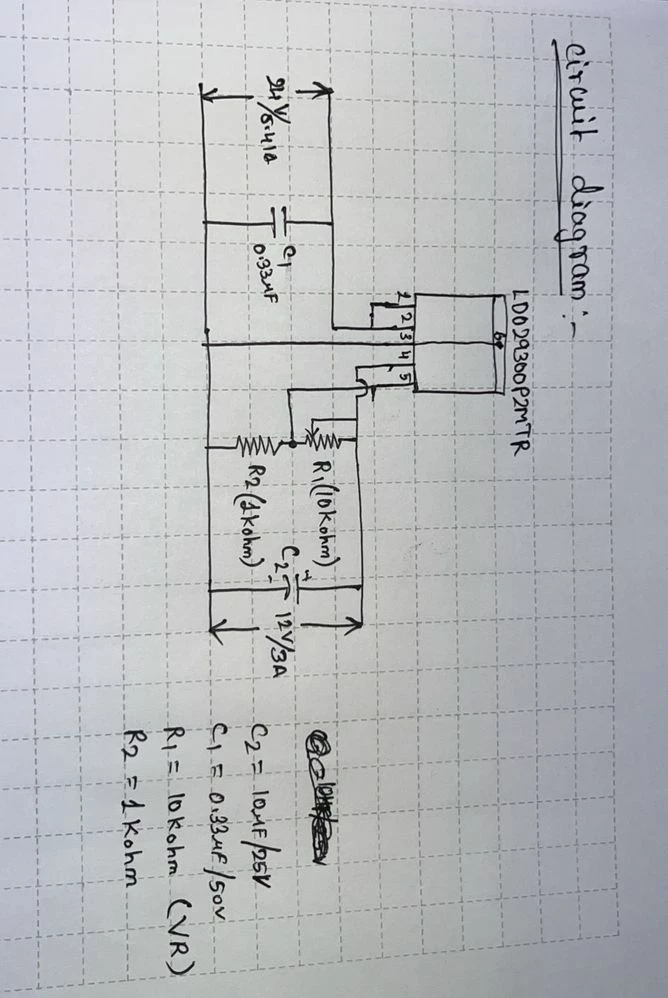
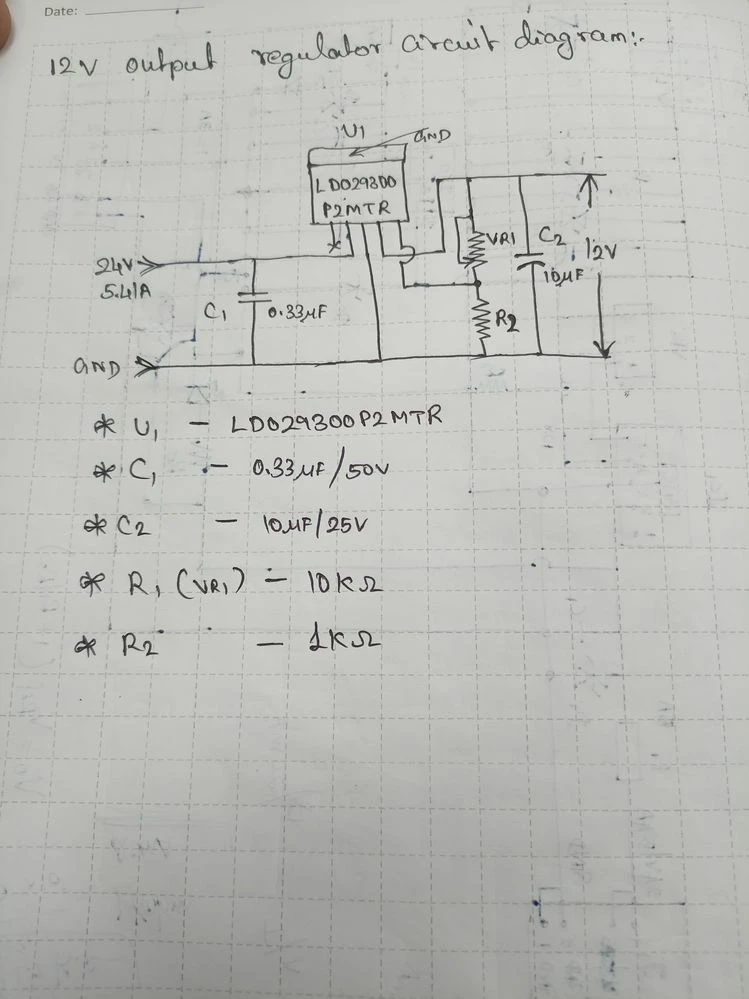
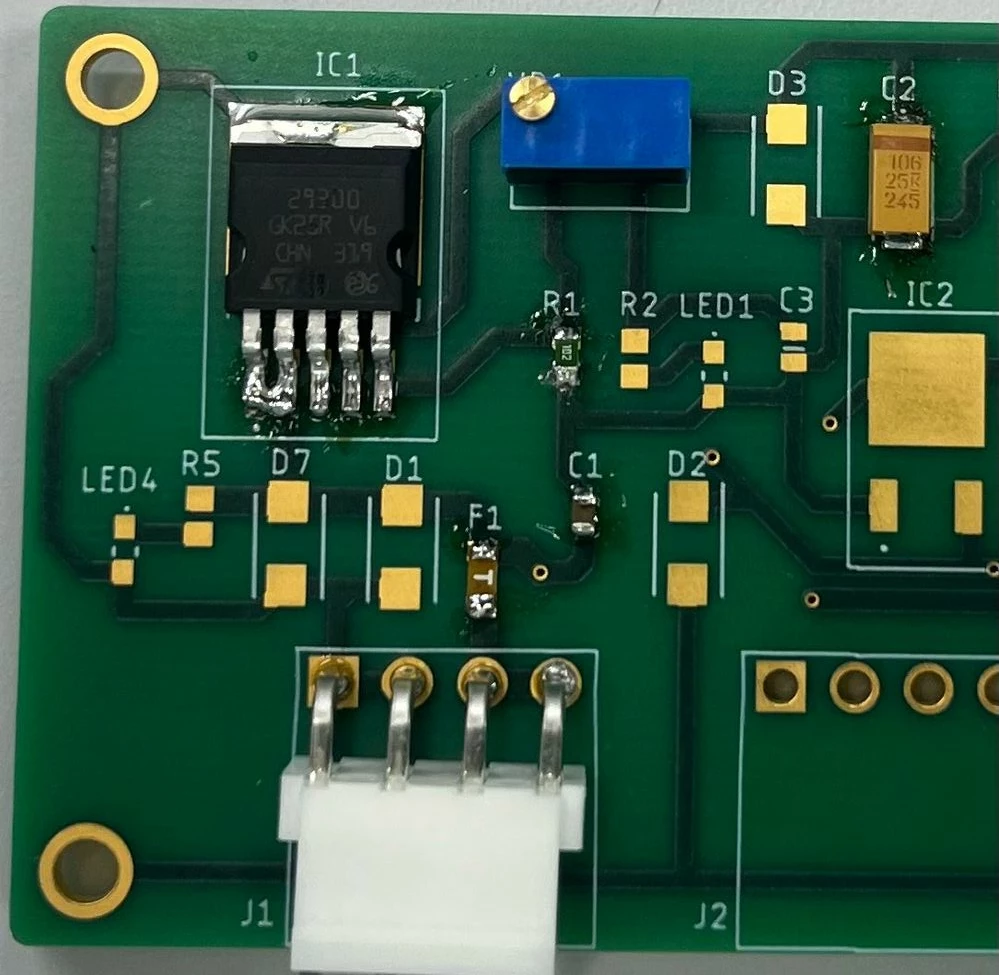
We have implemented the following circuit. This matches the application circuit given in datasheet of LDO29300P2MTR.But it does not yield expected output. We need help!!IMG20250328160749.jpg
Best answer by saran

@Andrew Neil 

I have attached the images for your reference. Kindly let me know if I have made any mistakes
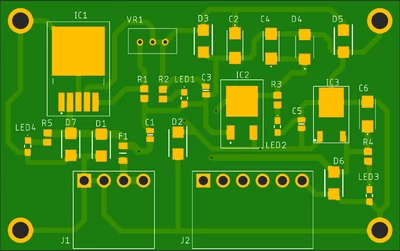
 

saran_0-1743219895566.png

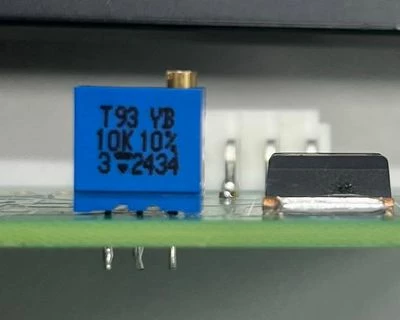
WhatsApp Image 2025-03-29 at 9.11.29 AM.jpegWhatsApp Image 2025-03-29 at 9.23.29 AM.jpegWhatsApp Image 2025-03-29 at 9.27.10 AM.jpeg

8 replies

Andrew Neil
Super User
March 28, 2025

@saran wrote:

 it does not yield expected output. !!


So what output does it yield ?


@saran wrote:
AndrewNeil_0-1743160143634.png

What is the significance of the 5.41A there?

The LD29300 is only a 3A regulator ...

https://www.st.com/en/power-management/ld29300.html 


@saran wrote:

This matches the application circuit given in datasheet 


Not quite:

AndrewNeil_1-1743160439834.png

You've left the INH pin open.

A complex system that works is invariably found to have evolved from a simple system that worked.A complex system designed from scratch never works and cannot be patched up to make it work.
saranAuthor
Associate II
March 28, 2025

The IC takes an input voltage of 24V/5.4A , expected output is 12V BUT IT GIVES 0V . Also where should I connect the INH pin.

Andrew Neil
Super User
March 28, 2025

@saran wrote:

The IC takes an input voltage of 24V/5.4A 


The IC takes an input voltage; the current is determined by the load.


@saran wrote:

expected output is 12V BUT IT GIVES 0V . .


The output depends on R1 - so what do you have that set to?


@saran wrote:

where should I connect the INH pin.


As the datasheet shows - connect it high for 'ON', or low for 'OFF':

AndrewNeil_0-1743162989485.png


A complex system that works is invariably found to have evolved from a simple system that worked.A complex system designed from scratch never works and cannot be patched up to make it work.
Peter BENSCH
Technical Moderator
March 28, 2025

+1

And for an output voltage of 12V that can be set within narrower limits, I would replace VR1 with 1k and connect an 8.2k resistor in series to VR1. The output voltage should then be adjustable between approx. 11.2V-12.6V.

saranAuthor
Associate II
March 28, 2025

@Andrew Neil

R1 value is 10Kohm ; R2 is 1Kohm

saranAuthor
Associate II
March 28, 2025

@Peter BENSCH

I have shorted pin 1 and pin 2. Still, the output is 0V. If you have any sample circuits for the LDO29300P2MTR, kindly help me solve the issues.


Andrew Neil
Super User
March 28, 2025

Then check your resistors & wiring.

Perhaps show a good, clear photograph of your setup.

A complex system that works is invariably found to have evolved from a simple system that worked.A complex system designed from scratch never works and cannot be patched up to make it work.
saranAuthorBest answer
Associate II
March 29, 2025

@Andrew Neil 

I have attached the images for your reference. Kindly let me know if I have made any mistakes
 

saran_0-1743219895566.png

WhatsApp Image 2025-03-29 at 9.11.29 AM.jpegWhatsApp Image 2025-03-29 at 9.23.29 AM.jpegWhatsApp Image 2025-03-29 at 9.27.10 AM.jpeg

saranAuthor
Associate II
March 29, 2025

@Andrew Neil 

The chip gives expected output 12V but within a fraction of second , voltage drops to 0V.

saranAuthor
Associate II
March 29, 2025

@Andrew Neil 

@Peter BENSCH 


Thanks for the help. LD29300P2MTR will work on 2.5 V to 14V only. it will never work greater than 14V. We can use the MIC29302WU 


Thanks &Regards,

Saravanan G

Peter BENSCH
Technical Moderator
March 29, 2025

Sorry, I had also overlooked this during a cursory glance at the data sheet: although the LD29300 can withstand an input voltage of up to 30V, it actually only works up to 14V. This can be found in the data sheet as footnote 1 under table 2:

Above 14 V the device is automatically in shutdown.

Regards
/Peter

Andrew Neil
Super User
March 31, 2025

@Peter BENSCH wrote:

This can be found in the data sheet as footnote 1 under table 2:

Above 14 V the device is automatically in shutdown.


So it does!

@saran - here:

AndrewNeil_0-1743410407092.png

@saran - always important to understand that these "Absolute Maximum" ratings are not operating specs!

A complex system that works is invariably found to have evolved from a simple system that worked.A complex system designed from scratch never works and cannot be patched up to make it work.