1. pic is with 320 x 240 pix TFT ; the speed is limited by the speed from SPI : see ds of TFT chip, ILI9341 ,
has max. 10Mbit

I drive it with 18Mbit , it works also at 24Mbit...but i didnt want to kill it. So 60% overclocking...
Now think simply : how many pix (cls -> 320x240 = 76800 ; RGB, 565 format -> 16bit/pixel -> 1,2 mio bits ;
/10Mbit -> 122 ms , to set all pix on TFT at normal speed ; you cannot overclock it, like i did just for fun, for a product, that should work . (btw the 6ms refresh it did one time - then a pin on the H743 died...so was far over all limits! So forget anything with 6ms screen update .)
Even the 18Mbit overclocking i would never do in any product, that should be sold.
For fast screen full update ( 10ms or so) need something like the EVE graphics on TFT , then no problem.
With simple controller on TFT your limited by spi-speed + number of pixels. Thats it.
2. So you have to drive the pixel update faster: spi with EVE , or (fast) cpu with double frame buffer and direct parallel access to TFT.
Reading data from SD card is possible, but (i do for audio player) sd-cards have some 1...100ms delay, until response; (good, new SanDisk 0,5..1ms, old cheap card 1....40ms. )
So dont expect wonders with sd-cards.
this is R/W test from a 16 GB Transcend card, about 1 year in use:
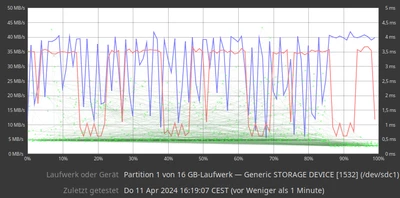
Transfer/Interface speed is always about 400Mbit here, so all dips are some delay, until data coming.
And on a STM32 you have no (native) UHS mode, so ... i got max. 8MB/s effective read speed.
