
Community Manager
March 26, 2026

What’s new in STM32CubeIDE

  • March 26, 2026
  • 1 reply
  • 666 views

STM32CubeIDE 2.1.0 brings broader device support, smoother workflows, and faster builds so you can develop and debug STM32 projects more efficiently.

Key updates and benefits

Broader MCU support for new designs

Support for the STM32C5 series and additional microcontrollers in the STM32WBA2, STM32WL5 dual-core, STM32H5, STM32U3, and STM32F7 series, enabling you to adopt the latest STM32 products without changing tools.

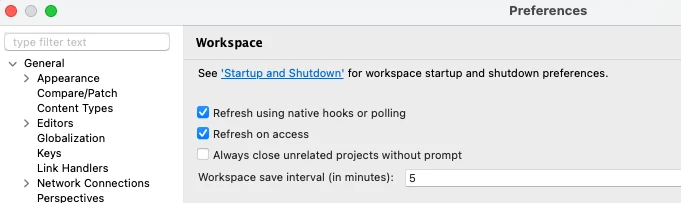
Auto-refresh of Project Explorer

The Project Explorer now automatically updates when files in the workspace change.
This removes the need to manually refresh after code regeneration (for example with standalone STM32CubeMX), improving interoperability and saving development time.
 

Maxime_MARCHETTO1_0-1774425847923.png


CMake presets support

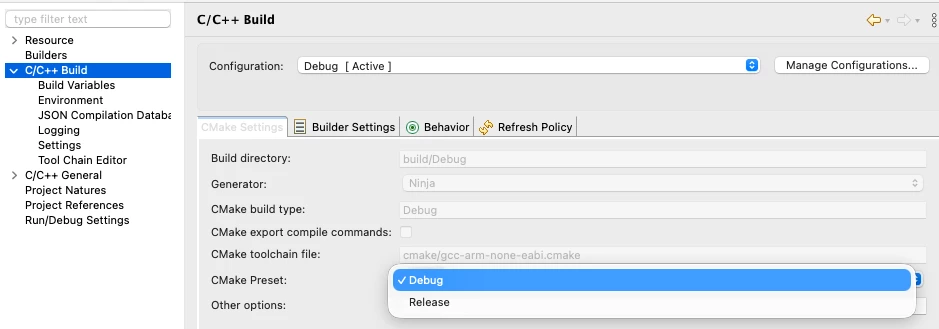
STM32CubeIDE now supports CMake presets, the modern interface between IDEs or CI systems and build systems.
This makes it easier to import existing CMake-based codebases into STM32CubeIDE, streamline CI integration, and work smoothly with STM32CubeMX2 exports that use CMake instead of native project files.
Maxime_MARCHETTO1_1-1774425847927.png


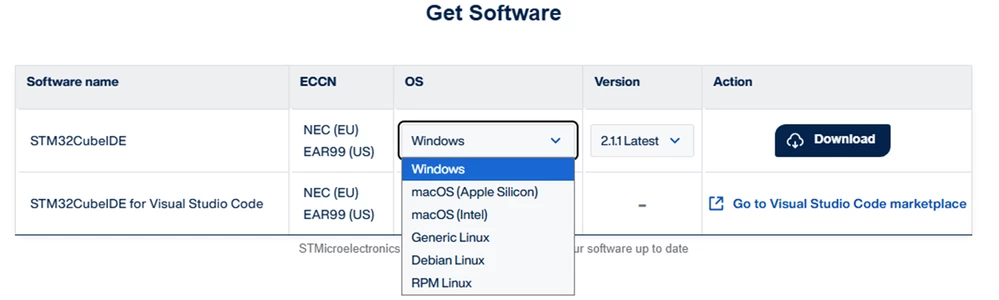
Native macOS AArch64 support

A new all-in-one macOS installer provides AArch64 binaries for JRE, GCC, and key utilities.
Mac users on Apple silicon benefit from noticeably faster builds and smoother overall performance, with remaining x86_64 tools to be migrated in future updates.
Maxime_MARCHETTO1_2-1774425847932.png


Toolchain updates

  • GNU Tools for STM32 based on GCC-14.3.1 is the new default toolchain:
    • Native AArch64 package for Mac users enables faster builds.
    • Newlib rebuilt with -O2 optimization for improved runtime performance.
    • Full release notes are available online.

  • ST Arm Clang based on Clang 21.1.1:
    • Improved standards compliance and enhanced optimization.
    • Improved C++20/23 and C23 support, diagnostics, and static analysis.
    • Includes Picolibc 1.8.10 and Newlib 4.5.0.

Overall, STM32CubeIDE 2.1.0 helps you accelerate development, improve code quality, and take full advantage of the latest STM32 devices across Windows, Linux, and macOS (including Apple silicon).

Your feedback is essential in shaping the future of STM32CubeIDE as it allows us to tailor it precisely to your requirements. We look forward to reading your ideas and questions on our community forum!

Additional resource


First published on Mar 26, 2026

1 reply

Ahmet Yasin CİVAN
Associate III
April 17, 2026

Thanks to the ST team for the improvements and the new release. However, when we think about the future of tools in the embedded software world, it is high time we talk about an Artificial Intelligence (LLM) support integrated directly into the heart of STM32CubeIDE.

Coding habits are changing rapidly today, and we are right in the middle of the AI era. IDEs need to evolve from being just text editors and compilers into assistants that take the load off the developer. We know ST has taken steps like Sidekick, but a fully integrated CubeIDE LLM experience should now become a standard. While the general software world is rapidly shifting towards smart IDEs, embedded systems should not fall behind.

Here are some revolutionary capabilities that a native, hardware-aware LLM inside STM32CubeIDE could provide:

  1. Embedded-Specific Smart Code Completion: Standard AI tools struggle to understand the hardware layer. An LLM inside CubeIDE, knowing the project's ioc file, the selected MCU, and active peripherals directly, could suggest HAL or LL library codes perfectly suited to that context. It could generate device-specific post-initialization code in seconds.

  2. Smart Debugging and HardFault Assistant: The biggest nightmare for embedded system developers is HardFault errors. Instead of examining registers and memory addresses for hours when the code crashes, the integrated AI could directly analyze the Call Stack, Memory, and CPU register states to explain the root cause. For example, it could save us from hours of searching by saying, "You got a memory fault because you tried to access an uninitialized pointer on line 45, or because of a stack overflow."

  3. Documentation and Manual Integration: Instead of searching through 3000-page PDFs to remember exactly what a specific timer or DMA register does while writing code, we should be able to ask the AI inside the IDE and instantly get a summary and usage example of the relevant page.

  4. Code Explanation and Optimization: Especially when reviewing old projects written by someone else or writing complex interrupt routines, being able to ask the LLM "What exactly does this function do?" or "Optimize this loop to use fewer clock cycles" would shorten development time incredibly.

The STM32 ecosystem is incredibly strong in terms of hardware. However, for STM32CubeIDE to remain the leading development environment in the future, it is essential that it fully adopts the "AI-Powered IDE" vision. I hope we get the opportunity to test a powerful LLM assistant embedded right into the code editor and debug screens in the upcoming major releases!