
Associate
October 18, 2023
Question

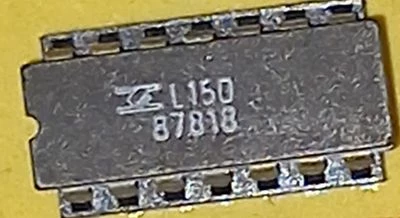
Vintage ST/SGS-thomson component ID
  • October 18, 2023
  • 2 replies
  • 5170 views

20231017_195147.jpg

looking to identify this IC, it's most likely from the mid to late 70s and my own hunt has turned up nothing, I would expect it to most likely be some form of amplifier as it is used in a preamp circuit. 

Any help would be appreciated, thanks!

Fergus.

This topic has been closed for replies.

2 replies

Peter BENSCH
Technical Moderator
October 19, 2023

Welcome @Cooldeepseaaudio, to the community!

The L150 was actually once produced by SGS-Ates, but no more information can be found. Old data books from 1974/75 or 1982 do not contain the L150 either, so it could be more recent.

However, it might help to analyse the circuit around the L150, which is most likely a single opamp, so you should be able to see its function quite well.

Hope that helps?

Good luck
/Peter

Associate
October 19, 2023

Thanks for your quick response, unfortunate that there isn't more info but it's definitely somewhere to start. there's a pair of the l150s and a ua741tc opamp on a board that appears to have been a modification to the original preamp circuit, the board is made more confusing by the lighter pcb using the darker pcbs ground as it's positive rail and both being powered from seperate power supplies. at least I have the two to test against each other, thanks!

20231018_101058.jpg

Tesla DeLorean
Guru
October 19, 2023

Something for a different era for sure. Not sure I've got databooks going back that far.

Yes, looks like the 16-pin DIP was replaced by new board. Best perhaps to reverse engineer the board, diagramming the connectivity on the other side with the componentry.

Documenting online, with the make/model of equipment, would allow it to be spidered and perhaps find other users, etc.

Tips, Buy me a coffee, or three.. PayPal VenmoUp vote any posts that you find helpful, it shows what's working..
Peter BENSCH
Technical Moderator
October 19, 2023

Good luck! However, you should also take a close look at the capacitors, especially the electrolytic capacitors, because after so many years they often dry out and become dead.