

mscharrer
Associate
August 3, 2023
Solved

Strange noise distribution for gyro data from LSM6DSOX

  • August 3, 2023
  • 2 replies
  • 1501 views

When looking at a chart of integrated single-axis gyro data with a completely stationary sensor, I noticed that there are fairly large jumps once in a while.
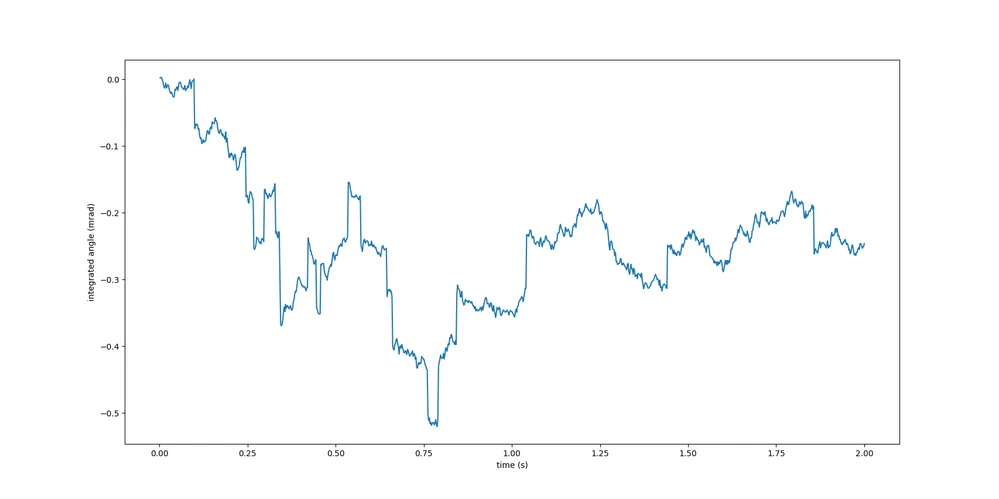
imu-integration-chart.png
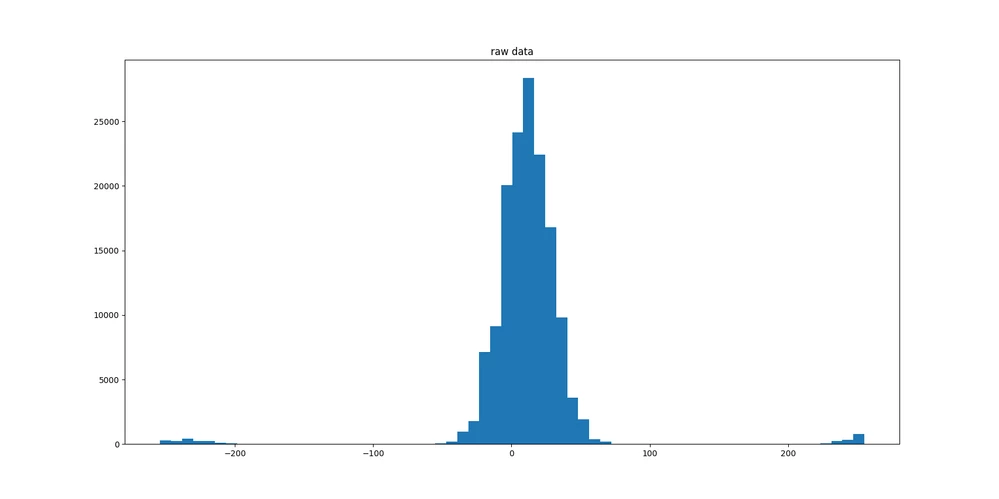
Since this doesn't look like brownian motion with normally distributed steps, I plotted a histogram of the raw gyro data and got the following:
raw_hist.png

In the center seems to be an expected almost-normal distribution of sensor noise with a bias in the expected range. However, there are strange secondary peaks at around ±220. What could be the cause of such a strange noise distribution?

PS: The gyro was run at FS=±250dps / 8.75dps/lsb and 1666Hz

This topic has been closed for replies.
Best answer by niccolò

`Hi @mscharrer ,
Welcome to ST community =)

do you perform some operations on the sensor, while logging the data? (like reading/writing other registers)
also is BDU enabled?
is it possible that these steps are due to external noise coming from some other component?

Niccolò

2 replies

niccolò
niccolòBest answer
ST Employee
August 3, 2023

`Hi @mscharrer ,
Welcome to ST community =)

do you perform some operations on the sensor, while logging the data? (like reading/writing other registers)
also is BDU enabled?
is it possible that these steps are due to external noise coming from some other component?

Niccolò

mscharrer
mscharrerAuthor
Associate
August 4, 2023

I think you're right about BDU being the issue.
When the value changes from e.g. zero (0x0000) to -1 (0xffff) I sometimes got the mixed up 0xff00 or 0x00ff. With normal noise added on top, you get the strange histogram I posted.