Associate
October 22, 2025
Question

Help troubleshooting stm32g431 board

  • October 22, 2025
  • 4 replies
  • 1387 views

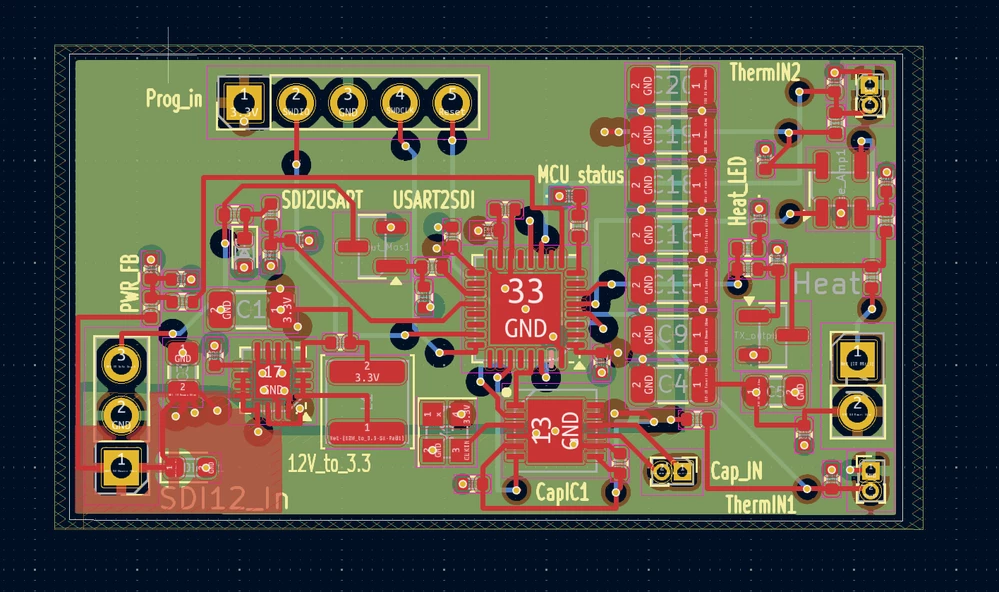
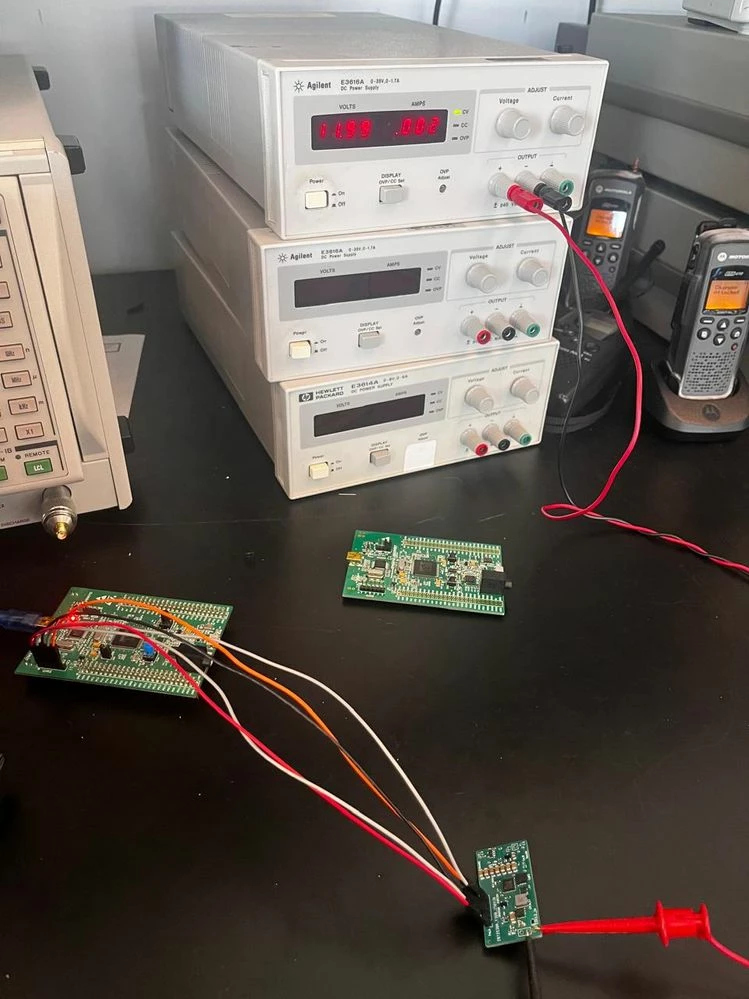
Hi. I designed a stm32 board an am trying to program it with a stm32 development board. i am having issues with programming it. This is my board design and my programming setup. I have connected the stm32f4 to my laptop to program it and the Integrated Circuit I'm using on my board is the stm32 g431. I know i have not pulled boot0 to low which is a problem i tried to resolve using option bytes where i set the nBoot1 byte to 0. But i have my boards boot up and then after clearing flash storage, they are usually stable. The board isn't dead since current is being drawn but the stm32 status LED is blank and when i try to connect to it with the stm32 programmer, i get ' Unable to detect Core ID. No stm32 target found. If your product uses debug authentication, please enable debug authentication. Please help me figure out what is wrong. This is the second board that has gone this way. I only have 3 more left.

 

WhatsApp Image 2025-10-22 at 16.02.43_99bd9ff3.jpgScreenshot 2025-10-22 161018.pngScreenshot 2025-10-22 160147.png

aks1_0-1761233999598.png


4 replies

Karl Yamashita
Principal
October 22, 2025

STM32Cube Programmer shows you're connected to a STM32F4Discovery, not your custom STM32G4. 

Pull the JP1 jumper so that the STM32F4 is no longer powered. Then you should be able to connect to the STM32G4.

If a reply has proven helpful, click on Accept as Solution so that it'll show at top of the post.CAN Jammer an open source CAN bus hacking toolCANableV3 Open Source
aks1Author
Associate
October 22, 2025

The jumper is pulled. The reason that is showing is prolly because i am programming the stm32g431 though the debug pins of the stm32f4. 

Karl Yamashita
Principal
October 23, 2025

From the image, the jumper JP1 is there.

If a reply has proven helpful, click on Accept as Solution so that it'll show at top of the post.CAN Jammer an open source CAN bus hacking toolCANableV3 Open Source
Andrew Neil
Super User
October 23, 2025

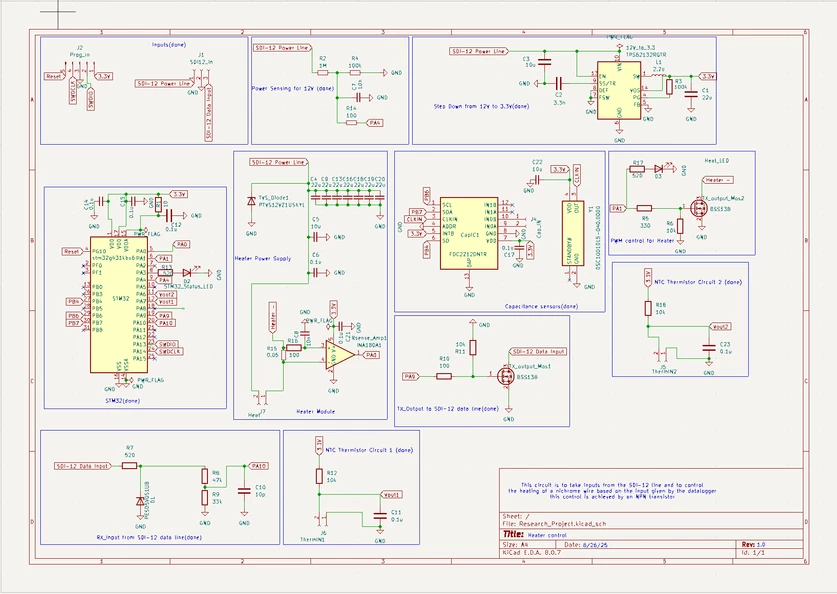
You haven't shown the schematic of your custom board.


To be honest, a standalone ST-Link isn't expensive - Why not just get one?

Although it is technically possible to use the one in a Dev Board, using a standalone is a lot more straightforward!

The thing about using the one from a Dev Board is that you need to be sure that the Dev Board's target processor is completely disconnected - so as not to interfere with the connection.

A complex system that works is invariably found to have evolved from a simple system that worked.A complex system designed from scratch never works and cannot be patched up to make it work.
aks1Author
Associate
October 23, 2025

aks1_0-1761233877128.png

Here you go. I have also updated the post description with the image The reason for not putting a USB port on the custom board is because it will be sealed with epoxy in an enclosure and it will destroy the USB port.

Andrew Neil
Super User
October 23, 2025

@aks1 wrote:

The reason for not putting a USB port on the custom board is...


I didn't suggest putting a USB port on the board.

I just suggested that you'd make your life easier by using a standalone ST-Link - rather than waste time faffing about with the one on your Discovery board.

A complex system that works is invariably found to have evolved from a simple system that worked.A complex system designed from scratch never works and cannot be patched up to make it work.
LCE
Principal II
October 23, 2025

One more vote for a standalone ST-Link.

I really like that they built into the ST-Link a USB-VCP so that you only have one connector for flashing and UART-debugging.

Just working with it, I prefer the UART & LED debugging so much to the standard (?) debugging with CubeIDE, which I use only with really bad faults.


Andrew Neil
Super User
October 23, 2025

@LCE wrote:

I really like that they built into the ST-Link a USB-VCP


Only in the ST-Link v3.

But this would be an added advantage over a Dev Board - as they don't make external access to the VCP at all convenient!

@aks1 : With an STLINK-V3SET you also get an extra SPI/UART/I2C/CAN/GPIO bridge.

With an STLINK-V3PWR you also get power measurement.

These options are obviously a bit more expensive!

Full range here: https://www.st.com/en/development-tools/hardware-debugger-and-programmer-tools-for-stm32.html

A complex system that works is invariably found to have evolved from a simple system that worked.A complex system designed from scratch never works and cannot be patched up to make it work.
LCE
Principal II
October 23, 2025

standalone ST-link is not an option as mentioned above. I need to encapsulate the board in epoxy
> and it will be lowered into a trench for long periods of time. 

We're talking about development and flashing here, we do not deliver our products which have an STM32 with an ST-Link! :D

First step is to have it running in the lab, and that's where good tools make development much easier.

As you are experiencing now, saving on tools can cause trouble...

And even Andrew's suggestion with the USB port: for production you would not need to install these components.


Even on one of our smallest PCBs, I have 5 pins for the prog. adapter and another 3 for the UART.
And for the production guys I made an extra adapter PCB from ST-Link to these 2mm connectors.

LCE_0-1761237376968.png


Andrew Neil
Super User
October 23, 2025

@LCE wrote:

Andrew's suggestion with the USB port


Not my suggestion. @aks1 made that up - I never mentioned a USB port!

A complex system that works is invariably found to have evolved from a simple system that worked.A complex system designed from scratch never works and cannot be patched up to make it work.
LCE
Principal II
October 23, 2025

> Not my suggestion. @aks1 made that up - I never mentioned a USB port!

Oops, sorry!

I guess aks1 misunderstood your suggestion to use an ST-Link-device to put a complete ST-Link circuit on his board...