0xE2CB is a left shifting answer
#include <windows.h>

#include <stdio.h>
#include <stdlib.h>
#include <math.h>

typedef unsigned char uint8_t;
typedef unsigned short uint16_t;

int main(int argc, char **argv)
{
 int i, j, k;
 uint16_t crc;
 uint8_t test[] = { 0x23,0x41,0x54,0x4F,0x4E,0xFF,0x53,0x4C,0x30,0x43,0x55,0x52,0xFF,0x0A,0x30,0x31,0x32,0x33,0x34,0x35,0x36,0x37,0x38,0x39 };

#define POLY 0x8005

 crc = 0x0000;

 for(j=0; j<sizeof(test); j++)
 {
 crc = crc ^ (test[j] << 8);

 for(i=0; i<8; i++)
 {
 if (crc & 0x8000)
 crc = (crc << 1) ^ POLY;
 else
 crc = (crc << 1);
 }
 }

 printf("crc=%04X\n", crc);

 return(1);
}
0x43BD is the right shifting answer with the 0xA001 poly (ie 0x8005 reversed)
#include <windows.h>

#include <stdio.h>
#include <stdlib.h>
#include <math.h>

typedef unsigned char uint8_t;
typedef unsigned short uint16_t;

int main(int argc, char **argv)
{
 int i, j, k;
 uint16_t crc;
 uint8_t test[] = { 0x23,0x41,0x54,0x4F,0x4E,0xFF,0x53,0x4C,0x30,0x43,0x55,0x52,0xFF,0x0A,0x30,0x31,0x32,0x33,0x34,0x35,0x36,0x37,0x38,0x39 };

#define POLY 0xA001

 crc = 0x0000;

 for(j=0; j<sizeof(test); j++)
 {
 crc = crc ^ test[j];

 for(i=0; i<8; i++)
 {
 if (crc & 0x0001)
 crc = (crc >> 1) ^ POLY;
 else
 crc = (crc >> 1);
 }
 }

 printf("crc=%04X\n", crc); // 0x43BD

 return(1);
}


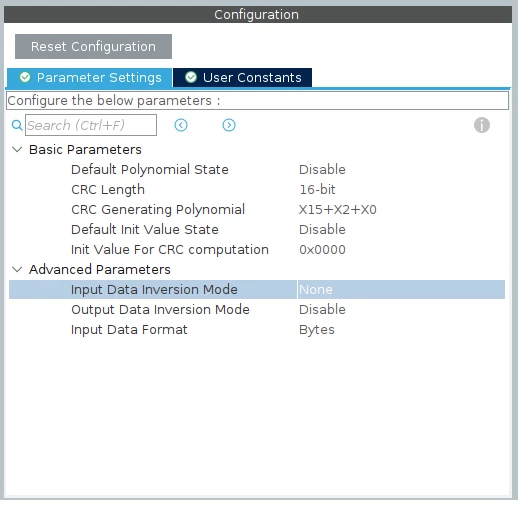 I am using the data as shown below and the CRC should be 0x43B8 but the value got from the API is different. So I am missing something.